

Note: This image is for illustrative purposes only and may not reflect the exact execution of life-saving techniques.
The journey into parenthood is filled with beautiful milestones, from the first time you hold your little one to their first steps.
Along with these joyful moments, it is completely natural to feel a sense of heavy responsibility. You want to ensure your home is a sanctuary where your child can grow and thrive safely.
As doulas, here at Mama Doula Canada, we understand that for many families: especially those who have recently moved to Canada and are building their support network from the ground up: the thought of a medical emergency can feel overwhelming. You might be navigating a new healthcare system while also learning the ropes of caring for a newborn or toddler. We want you to know that you are not alone. Our goal is to replace that anxiety with confidence, providing you with the knowledge to act quickly and calmly if your child ever needs help.
Centering Yourself: The Role of the Nervous System in Emergencies
Before we dive into the technical steps of First Aid and CPR, it is helpful to talk about what happens to your own body during a stressful situation. When we see our child in distress, our nervous system often shifts into a state of sympathetic activation: the well-known "fight or flight" response. You might feel your heart race, your palms sweat, or your mind go blank.
This is a biological survival mechanism, but in a medical emergency, we want to help you shift back toward a more regulated state. Being able to access a "calm and connected" state allows you to think more clearly and follow the steps you’ve learned. One simple tool we recommend to our families in Toronto, London ON, and the Kitchener-Waterloo region is "box breathing": inhale for four seconds, hold for four, exhale for four, and hold for four. Taking just one or two of these breaths can help ground you before you begin your care.
Why Child and Infant CPR is Different
It is a common misconception that babies are just "small adults." In reality, their physiology is quite different, which is why the 2026 Canadian guidelines emphasize specific techniques for children and infants.
Most adult cardiac arrests are caused by heart issues. However, in children and babies, the primary cause is usually a respiratory issue: meaning they have stopped breathing or are struggling for air. Because of this, the latest 2026 guidelines place a heavy prioritization on rescue breaths. While adult CPR often focuses heavily on "hands-only" compressions, for our little ones, getting oxygen into their lungs is the most critical step to saving their lives.
The First Steps: Check, Call, and Prepare
When you notice something is wrong, the very first thing to do is ensure the area is safe for you to provide help. Once you’ve confirmed the scene is safe, you should check your child for a response. For an infant, you can gently tap the bottom of their foot and shout their name. For an older child, you can gently shake their shoulders.
If there is no response and they are not breathing normally, the most important action you can take is to call 911 immediately. If you are alone, the current guidelines suggest providing two minutes of care first and then calling 911, but if someone is with you, have them call right away while you begin CPR.
Mastering Infant CPR (Under One Year)
Providing CPR to an infant requires a gentle but firm touch. The 2026 updates have refined how we approach these tiny chests to ensure we are as effective as possible.
The Compression Technique
The preferred method for infant compressions has shifted to favor the two-thumb encircling technique or the one-hand technique.
- Two-thumb encircling: Wrap your hands around the infant's chest and use both thumbs to press down on the lower half of the breastbone.
-
One-hand technique: Use the heel of one hand to compress the chest if the baby is larger or if your hands are small.
The goal is to compress the chest about 1.5 inches deep at a rate of 100 to 120 beats per minute.
Prioritizing Rescue Breaths
As doulas, here at Mama Doula Canada, we want to emphasize that after 30 compressions, you must provide two rescue breaths. For an infant, you will place your mouth over both their nose and mouth to create a seal. Blow gently: just enough to see the chest rise. Remember, their lungs are small, so a puff of air from your cheeks is often sufficient.
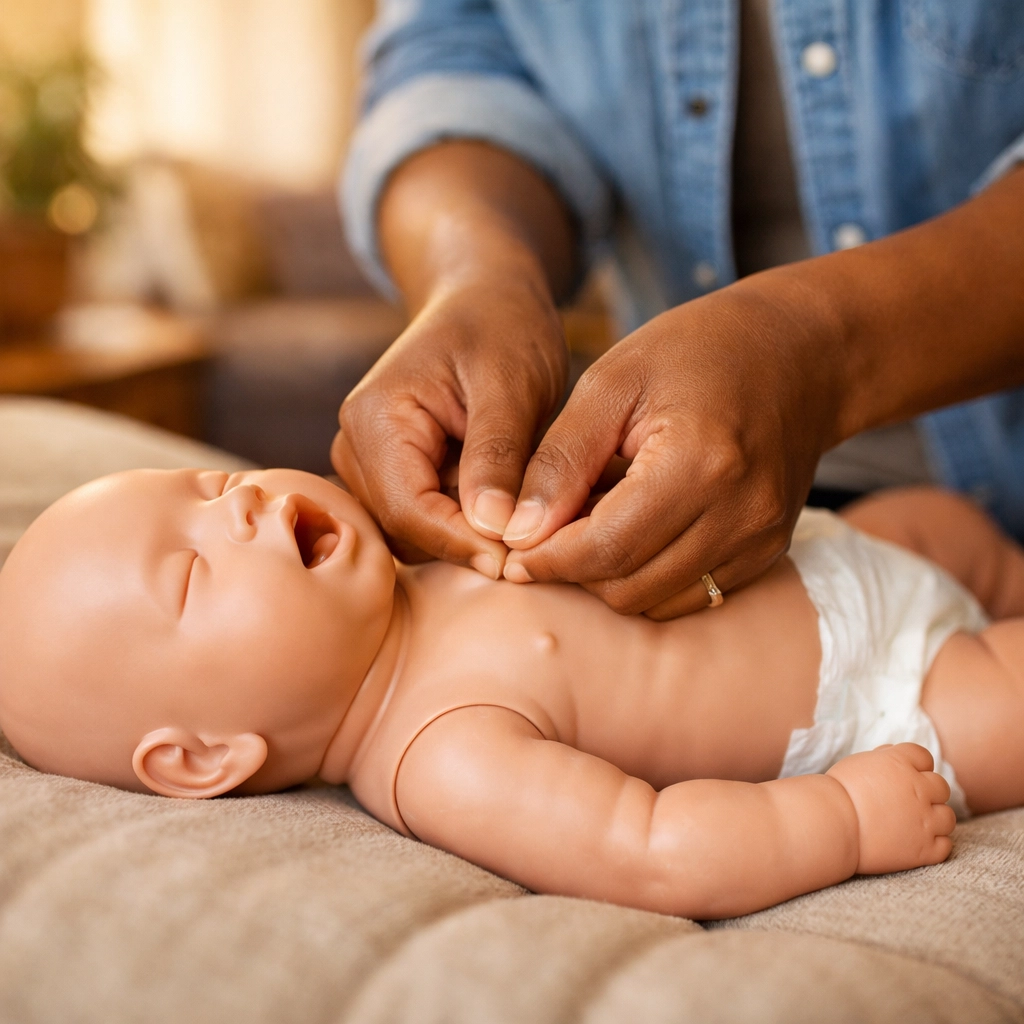
Note: This image is for illustrative purposes only and may not reflect the exact execution of life-saving techniques.
CPR for Children (Ages One to Puberty)
As children grow, the way we provide support changes slightly. For a child over the age of one, you will use either one or two hands for compressions, depending on the child’s size. You want to compress the chest about 2 inches deep.
Just like with infants, the 2026 guidelines remind us that rescue breaths are non-negotiable for children. After every 30 compressions, tilt the head back slightly to open the airway, pinch the nose, and give two steady breaths into the mouth.
What to Do When a Child is Choking
Choking is one of the most common fears for parents, especially during the transition to solid foods. Understanding the 2026 protocol for choking can help you stay calm and act with precision.
For an infant who is choking and unable to cry or cough, the protocol is 5 back blows followed by 5 chest thrusts:
- Hold the infant face down along your forearm, resting your arm on your thigh.
- Deliver five firm back blows between the shoulder blades using the heel of your hand.
- If the object doesn't come out, turn them over and deliver five chest thrusts using two fingers in the center of the chest (similar to a compression).
For an older child, you would use the "Heimlich maneuver" or abdominal thrusts, standing behind them and pulling inward and upward just above the navel.
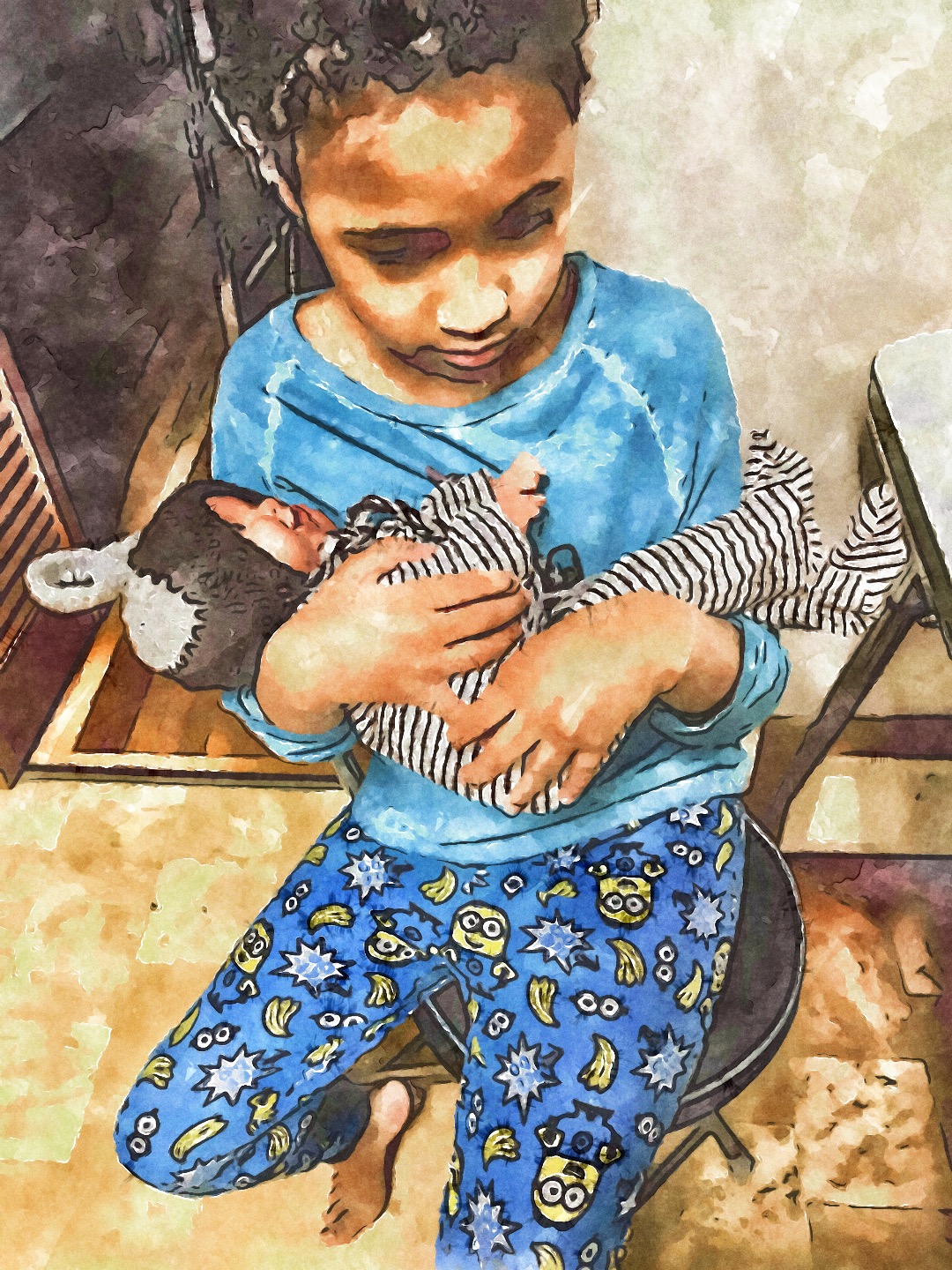
Note: This image is for illustrative purposes only and may not reflect the exact execution of life-saving techniques.
Building Your Safety Net at Home
Preparation is the best antidote to fear. We encourage all our families to have a well-stocked first aid kit and to keep emergency numbers in a visible place, such as the refrigerator. This is especially helpful if you have a language-aligned doula or a family member visiting who may not be familiar with local emergency procedures.
The Power of Hands-On Training
Reading a guide is a wonderful first step, but nothing replaces the confidence gained through hands-on practice. As doulas, here at Mama Doula Canada, we believe that every parent deserves to feel empowered in their ability to protect their child.
We offer specialized First Aid & CPR Training for Children and Babies tailored specifically for parents and caregivers. Our classes are designed to be a safe space where you can ask questions, practice techniques on mannequins, and connect with other families in your community. We offer support in Toronto, London, and the Kitchener-Waterloo area, and we take pride in being culturally aligned with the diverse families we serve. Whether you need a doula that speaks your home language or simply a compassionate instructor who understands your journey, we are here for you.
You Are Your Child’s Best Protector
Taking the time to learn these skills is an act of love. It shows your commitment to your child’s well-being and your own growth as a parent. Remember that you don't have to be perfect; you just need to be prepared. By understanding the 2026 guidelines and practicing nervous system regulation, you are creating a safer, more harmonious environment for your family to grow.
If you ever feel unsure, reach out. Whether it’s through our contact page or by joining one of our upcoming workshops, we are honored to be part of your village. You have the strength and the intuition to care for your little one: we are just here to provide the tools to help you shine.
References
- Canadian Red Cross (2026). First Aid & CPR Guidelines for Infants and Children.
- Heart and Stroke Foundation of Canada (2026). Pediatric Basic Life Support Updates.
- Evidence Based Birth. (2024). Safety and Prevention in the Postpartum Period.
- Mama Doula Canada. (2026). Professional Support & Resources: Safety Training Series.